Enver Hoxha and Isaias Afwerki: A Tale of Two Strongmen
From Liberation to Isolation: How the Leaders of Albania and Eritrea Turned Independence into Iron Rule
By Ahmeddin Osman
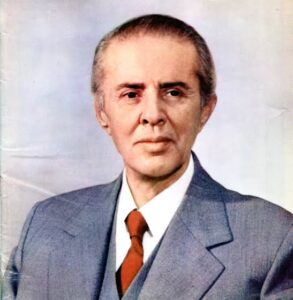
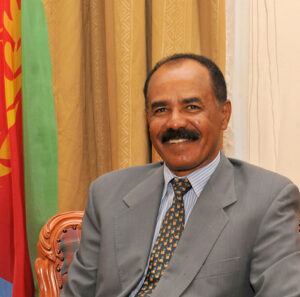
In the past century, two small nations, Albania in Southeastern Europe and Eritrea in the Horn of Africa have suffered under unusually repressive regimes led by men who came to power as revolutionary heroes. Enver Hoxha, who ruled Albania from 1944 until his death in 1985, and Isaias Afwerki, Eritrea’s only president since its independence in 1993, share striking similarities in their backgrounds, ideologies, and authoritarian trajectories.
Both emerged from anti-colonial movements in countries once occupied by Fascist Italy, and both led their nations into profound economic and political isolation. This article explores the parallel paths of Hoxha and Isaias, examining their early lives, leadership
styles, and lasting impact on their countries.
Early Life and Education
Enver Hoxha was born in 1908 in Gjirokastër, southern Albania, during the final years of Ottoman rule. He hailed from a relatively privileged family and pursued higher education in France, attending the University of Montpellier and the Sorbonne in Paris. Though
he never completed his studies, it was in France that Hoxha encountered Marxist-Leninist ideology, which would later define his rule.
Isaias Afwerki was born in 1946 in Asmara, during the period of British Military Administration that followed Italy’s defeat in Eritrea in 1941. After completing high school in Addis Ababa, he joined the Eritrean independence struggle and was later sent to China for military and political training in the late 1960s. There, he absorbed Maoist principles of discipline, self-reliance, and mass mobilization, foundations that shaped both his thinking and the military organization he would lead.
Revolutionary Ideology
Hoxha’s Albania was arguably the most doctrinaire Marxist-Leninist state in Europe. After breaking ties first with the Soviet Union and then with Maoist China, Hoxha declared Albania the world’s only “pure” socialist state. His ideology emphasized self-reliance, anti-revisionism, and the complete elimination of class enemies.
Though Isaias Afwerki does not claim to be a Marxist, his ideology shares many similarities with leftist authoritarianism. Deeply nationalistic and rigidly anti-imperialist, Isaias emphasizes state control, militarization, and suspicion of foreign influence. While lacking the theoretical vocabulary of communism, his worldview promotes centralized governance, enforced unity, and ideological conformity:hallmarks of one-party rule.
Economic Isolation
Both leaders enforced extreme economic isolation in the name of sovereignty and ideological purity.
Hoxha closed Albania off from the world. Foreign travel was banned, outside media was censored, and contact with diplomats or tourists was grounds for arrest. Albania was not only outside the capitalist West, it also distanced itself from other socialist states after accusing them of betraying true Marxism.
Eritrea under Isaias has followed a similar path. After initial cooperation with international donors in the 1990s, the regime expelled nearly all NGOs and halted foreign aid by the early 2000s. The economy is dominated by state-owned enterprises and military-run businesses. International agencies have been denied access, and Eritrea remains one of the most economically isolated countries in the world today.
Political Ascendancy and Rule
Enver Hoxha rose to power as the leader of the National Liberation Movement during World War II, gaining Soviet backing in his fight against Italian and German fascists. Following the war, he swiftly eliminated political rivals and established a one-party communist state under his absolute control.
Isaias Afwerki led the Eritrean People’s Liberation Front (EPLF) in a 30-year war against Ethiopian occupation. After achieving independence in 1993, he became the country’s first and only president. Although Eritrea adopted a constitution and promised elections, none have ever been held. All opposition parties remain banned, and political life is tightly controlled.
Leadership Style: Centralization and Paranoia
Both Hoxha and Isaias have governed through centralized, personalist rule, relying on coercion, fear, and loyalty rather than institutional governance.
Hoxha built a personality cult and eliminated even close allies who showed signs of independence. His regime was marked by purges, executions, and mass surveillance. Albanians lived under constant fear of being accused of treason, revisionism, or foreign collaboration.
Similarly, Isaias maintains near-total control over Eritrean life. Political opponents, journalists, and reformist insiders have been detained without trial—some for over two decades. National service is compulsory and indefinite, amounting to forced labor for much of the population. Like Hoxha, Isaias has systematically dismantled internal dissent, even within his own movement.
Persecution of Comrades
Hoxha turned against nearly all his early comrades. Among the most notorious cases was the suspicious death of Mehmet Shehu, a long-time ally and presumed successor. Hoxha accused Shehu of being a “foreign agent” and purged dozens of officials allegedly linked to him.
In Eritrea, the purge of comrades came in 2001, when Isaias arrested a group known as the “G-15”, former senior EPLF officials who had called for democratic reform. None have been tried or seen since. Others, including former ministers and ambassadors, have fled into exile or disappeared inside the country’s prison system.
Legacies of Isolation and Repression
After Hoxha’s death in 1985, Albania began a slow transition to democracy, though the scars of his rule lingered: economic backwardness, cultural isolation, and deep mistrust of authority. His legacy remains deeply polarizing in Albania, where some still remember him as a protector of sovereignty, while others see him as a tyrant who ruined the country.
Isaias Afwerki remains in power as of 2025. Eritrea is frequently ranked among the most repressive states in the world, and its youth continue to flee in large numbers. Despite brief optimism after a 2018 peace agreement with Ethiopia, Isaias quickly returned to a stance of military alertness and non-cooperation, reinforcing his image as a war-time ruler unable or unwilling to transition to peace.
Conclusion
Enver Hoxha and Isaias Afwerki represent a common pattern in post-liberation leadership: the transformation of revolution into repression. Their ideologies may differ in form, but their methods : absolute control, ideological rigidity, persecution of allies, and enforced isolation place them in the same lineage of authoritarian rulers.
Their stories offer a cautionary tale about the dangers of unchecked power and the tragic fate of nations that confuse independence with silence, and sovereignty with solitude.