


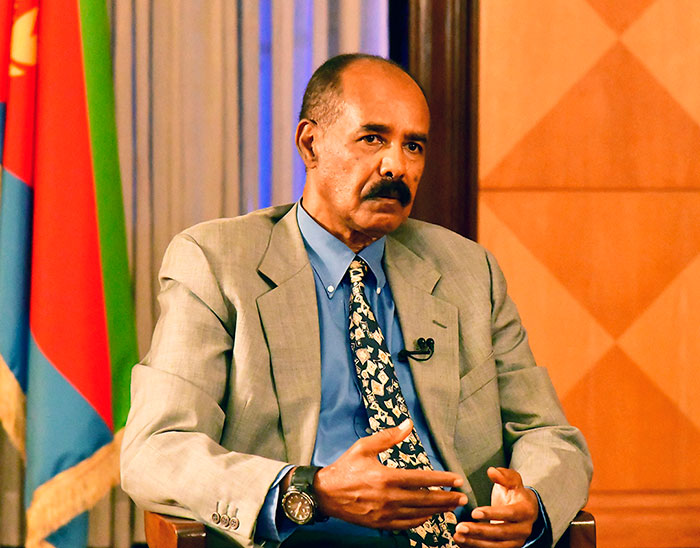
Why Isaias Hates Us, by Ahmeddin Osman
We, the Eritrean people, are known throughout history for our kindness and generosity. We are a people who opened our arms to strangers and embraced new ideas without fear. Before Islam reached Medina, it found refuge in our land. Christianity took root here early and peacefully. For centuries, Muslims and Christians lived side by side in harmony. Our villages echoed with prayers from mosques and churches, our lives shaped by tolerance and mutual respect.
We are also a people who resist injustice. We defied colonizers and dictators. We faced off with one of Africa’s strongest armies, the Ethiopian Derg regime, backed by both the West and the East. And we won. We paid the price in blood, but we stood tall, believing we were marching into freedom.
When Isaias Afewerki and his fighters entered Asmara in 1991, we celebrated. We embraced him as a hero. We overlooked the divisions he sowed during the armed struggle. We forgave his past cruelties because we wanted to build a peaceful, just, and prosperous Eritrea. We were ready to start fresh, united as one people with one dream: to live in dignity.
But that dream was stolen from us, by the very man we believed would protect it.
Why does Isaias hate us?
He hates our pride in our history. We live in one of the most beautiful and ancient lands in the world. The ruins of Qohaito, Balaw Kalaw, and Adulis tell stories of civilizations that thrived in peace and trade. From the 1930s to the 1970s, Asmara was a gem of the Middle East and East Africa, a city of art, fashion, cinema, music, and modern architecture. But today, this once-vibrant capital sleeps in darkness. Electricity is a rare luxury. Our mothers and grandmothers break their backs in long lines to collect a few buckets of water, delivered by trucks that appear only now and then.
He hates our love for beauty. We are not even allowed to paint our own homes without government permission. He wants our cities to reflect his bleak vision. He doesn’t want us to connect with one another. Transportation is deliberately crippled. To get on a bus, people line up at 4 a.m. for a ride that may never arrive. Some try to survive by selling their place in line , a heartbreaking symbol of a broken system.
Why does Isaias hate us?
Because he wants us to suffer. We are not allowed to withdraw more than 5,000 Nakfa, about $300, from our own bank accounts per month. And in 2025, Eritrea doesn’t have a single functioning ATM. There is no online banking. Even access to the internet is like pulling teeth , painfully slow, extremely limited, and only for the lucky few. The rest of the world moves forward, but Eritreans are deliberately cut off, kept in digital and economic isolation. We work, we save, and yet we are denied the dignity of using our own money. He wants us to always live in desperation, in need, in fear. He wants control, not prosperity.
Our young people are trapped in endless military service, locked in camps from the age of 18 with no end in sight. No careers. No futures. Just years of waiting, obedience, and hopelessness. Many are sent to die in foreign wars, in Tigray, in Sudan, in Congo, in the name of national security. But it’s not about defending Eritrea. It’s about defending a regime that fears peace more than it fears war.
Why does Isaias hate us?
Even when we celebrate Independence Day, the very day we longed for, the man who rules us doesn’t speak about Eritrea or Eritreans. He uses the occasion to lecture the world about outdated geopolitics, wars of the past, and his personal grudges. Not a word about our daily struggles. Not a word about freedom, dignity, or hope.
Isaias Afewerki is now in his late seventies. Most would expect a man of that age to reflect, to show compassion, to ease the pain of his people. But he shows no sign of mercy. Only cruelty. Only silence.
Why does Isaias hate us?
Because we are everything he is not. Kind. Generous. Brave. Resilient. We hold onto hope, even when he tries to crush it. We sing, we build, we care for one another in ways he cannot understand. He fears us, not because we are weak, but because he knows what we are capable of when we are free.
One day, we will be free again. And when that day comes, we will remember who we are: the people who welcomed prophets and strangers, who fought injustice without losing our souls, who forgave, who endured , and who never stopped dreaming of a better Eritrea.
Ahmeddin Osman
18 July 2025
