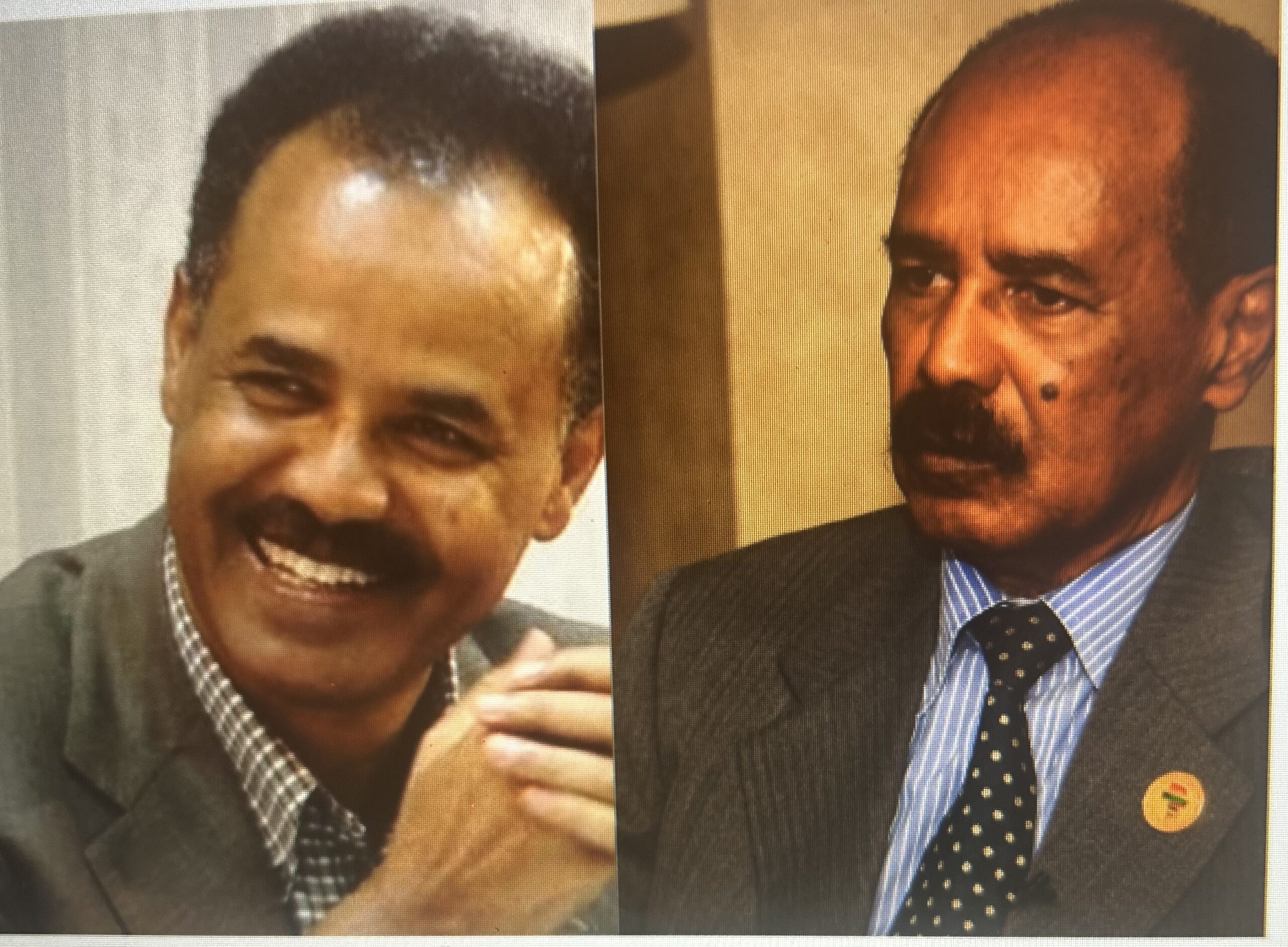
 How Did Isaias Afeworki Become Isaias Afeworki?
By Ahmeddin Osman
Forget democracy for a moment.
Forget elections.
Forget constitutions.
Forget political parties.
Ask an Eritrean a much simpler question:
What do you want from your country?
The answer is not complicated.
People want a normal life.
They want to wake up without fear.
They want to work and earn a living.
They want enough food for their families.
They want electricity and water.
They want to educate their children.
They want to marry, build a home and make plans for tomorrow.
They want to see their sons and daughters grow up without disappearing into endless national service.
They want to travel without asking permission.
They want to leave if they choose, and return home without fear.
They want their families together.
They want their children to believe that there is a future in Eritrea.
Is that too much to ask?
For most of the world, these are ordinary expectations of life.
For Eritreans, they have become dreams.
And that is the real tragedy of the Isaias era.
The people who sacrificed so much to create Eritrea did not sacrifice for a flag alone.
They sacrificed for freedom, dignity, security and a better life for their children.
Instead, an entire generation has grown up knowing only one leader, one brutal political system and one direction: Obedience.
THE PRICE
The result is visible everywhere: indefinite national service, political repression, closed civic space, economic stagnation, mass migration and broken families.
And perhaps the greatest damage is harder to measure:
The loss of hope.
Isaias has not only controlled Eritrea.
He has consumed its time.
He has consumed the best years of its young people.
He has consumed opportunities.
He has created a deep mistrust among communities
And he has left an entire generation asking how much longer they are expected to sacrifice.
WHEN ISAIAS IS NO LONGER THERE
But Isaias will not be there forever.
One day, the announcement will come:
ISAIAS AFEWORKI IS NO LONGER IN POWER.
For millions of Eritreans, that moment will be unlike anything they have experienced.
There will be shock.
There will be tears.
There will be uncertainty.
There may even be fear.
But there will also be something that has been missing for far too long:
HOPE.
The first responsibility of the interim leadership will be to tell Eritreans that the nightmare is over.
Not with another speech about sacrifice.
Not with another promise to wait.
But with immediate action.
The first announcements should be clear, practical and impossible to misunderstand.
1. NATIONAL SERVICE ENDS
Within two weeks, indefinite national service will end.
Sawa will no longer be a place where Eritrea’s young people surrender years of their lives.
Young Eritreans will be free to choose education, employment, family life and their future.
Our young people will finally belong to themselves.
2. POLITICAL PRISONERS COME HOME
All political prisoners and those detained for peaceful political activity, journalism or criticism will be released within weeks.
Families will finally know where their loved ones are.
Those who have disappeared into detention will have the opportunity to return to their families.
No Eritrean should lose their freedom simply for speaking their mind.
3. THE BORDERS OPEN
The interim leadership will immediately work with neighbouring countries to establish open, normal and peaceful movement across all Eritrea’s borders.
Eritreans will be able to leave and return without fear and unnecessary restrictions.
Families separated for years will have the opportunity to reunite.
The borders that divided Eritreans from their families will become bridges to the region.
4. THE 2% ENDS
The 2% diaspora tax will end.
The interim leadership will introduce a normal, transparent taxation system based on clear laws and applied fairly.
The relationship between Eritrea and its diaspora will change from one of obligation to one of partnership.
The diaspora will become a partner in rebuilding Eritrea.
5. THE PEOPLE BUILD THE POLITICAL SYSTEM
The interim leadership will bring together political groups, civil society, professionals, women, young people and the diaspora to build Eritrea’s political system.
The objective will not be to replace one dominant group with another.
It will be to create institutions that belong to the country and serve its people.
The system must be based on:
The Constitution.
Rule of law.
Freedom.
Justice.
Human rights.
Equality.
Accountability.
The state will serve the citizen.
Not the other way around.
6. RECONCILIATION, PEACE AND JUSTICE
Eritrea must confront the injustices of the past, not to seek revenge, but to ensure that they never happen again.
Victims deserve truth.
Families deserve answers.
The country needs justice.
But it also needs reconciliation.
The process must seek to build a harmonious society in which every Eritrean feels included, respected and secure.
No region.
No religion.
No community.
No political organisation.
No individual.
No group should ever again be allowed to dictate or dominate the destiny of the entire nation.
Eritrea belongs to all Eritreans.
7. ERITREA IS OPEN FOR BUSINESS AND INVESTMENT
The interim leadership will make a clear declaration to Eritreans and to the world:
ERITREA IS OPEN FOR BUSINESS.
Eritrean citizens, members of the diaspora and international investors will be welcomed to invest, establish businesses and create jobs in Eritrea.
The interim leadership will guarantee a transparent and predictable business environment, equal treatment under the law, protection of legitimate investment and an economy where enterprise and hard work can be rewarded.
Eritrea’s strategic location, coastline, ports, natural resources and talented people can become the foundation of rapid economic development.
The message will be simple: Eritrea is no longer closed. Eritrea is ready to do business with the world.
AND THEN, ERITREA CAN BEGIN AGAIN
Imagine an Eritrea where a young person wakes up knowing that their future belongs to them.
Where a mother does not fear losing her child to indefinite national service.
Where a father can plan for his children’s education.
Where families separated for years can come home.
Where Eritreans abroad are welcomed as partners.
Where Massawa and Assab become gateways to trade.
Where the Red Sea becomes an economic opportunity.
Where investors see stability rather than risk.
Where businesses can grow.
Where young Eritreans choose to stay because there is something worth staying for.
Eritrea has the land.
It has the coastline.
It has the strategic location.
It has natural resources.
But above all, it has its people.
The country does not need another generation of sacrifice.
It needs freedom to create.
It needs peace to prosper.
It needs institutions that serve people.
It needs leaders who understand that the purpose of power is not to control citizens, but to serve them.
THE SECOND INDEPENDENCE
The first independence freed Eritrea from foreign rule.
The next chapter must free Eritrea from fear, stagnation and the politics of permanent sacrifice.
The end of the Isaias era should not be feared as the end of Eritrea.
It should be welcomed as the beginning of Eritrea.
The beginning of families coming home.
The beginning of young people staying.
The beginning of businesses opening.
The beginning of hope.
The beginning of dignity.
The beginning of prosperity.
And perhaps, finally, the beginning of the Eritrea for which so many sacrificed their lives.
An Eritrea where nobody has to ask permission to dream.
An Eritrea where nobody is left behind.
An Eritrea where independence finally means what it was always supposed to mean:
THE FREEDOM TO LIVE.


